Czech Dialogues Unplugged: Mastering ‚Have‘ in the Past Tense(S02/E55 – daily podcast CZECH YOUR DAY)
 Renata Hrkalová
THIS WEEK’S TOPIC: CO JSI MĚL(A)?/WHAT DID YOU HAVE?
THE TRANSCRIPT/HANDOUT IS DOWN BELOW
Let’s put into practice what you have learnt this week.
2 dialogues full of expressions with „MÍT“ are ready for you.
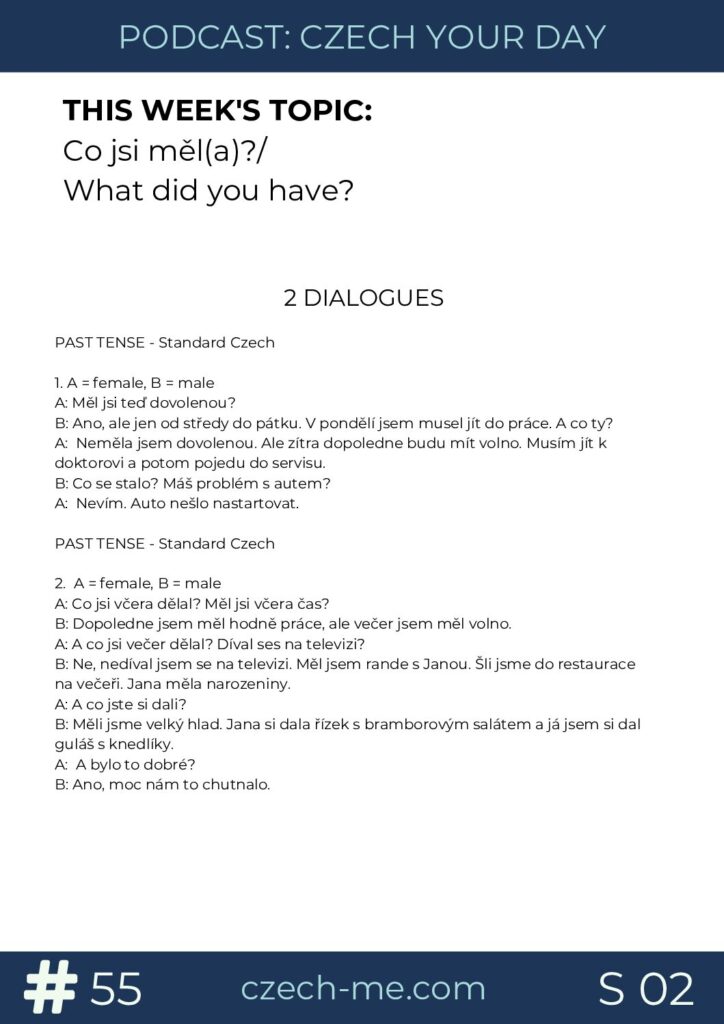
- ENGLISH TRANSLATION INCLUDED:
- 1.
- A: Měl jsi teď dovolenou? (Did you have a holiday now?)
B: Ano, ale jen od středy do pátku. V pondělí jsem musel jít do práce. A co ty? (Yes, but only from Wednesday to Friday. On Monday I had to go to work. And what about you?)
A: Neměla jsem dovolenou. Ale zítra dopoledne budu mít volno. Musím jít k doktorovi a potom pojedu do servisu. (I didn’t have a holiday. But tomorrow morning I will have time off. I have to go to the doctor and then I will go to the service.)
B: Co se stalo? Máš problém s autem? (What happened? Do you have a problem with the car?)
A: Nevím. Auto nešlo nastartovat. (I don’t know. The car wouldn’t start.)2.
- A: Co jsi včera dělal? Měl jsi včera čas? (What did you do yesterday? Did you have time yesterday?)
B: Dopoledne jsem měl hodně práce, ale večer jsem měl volno. (In the morning I had a lot of work, but in the evening I was free.)
A: A co jsi večer dělal? Díval ses na televizi? (And what did you do in the evening? Did you watch TV?)
B: Ne, nedíval jsem se na televizi. Měl jsem rande s Janou. Šli jsme do restaurace na večeři. Jana měla narozeniny. (No, I didn’t watch TV. I had a date with Jana. We went to a restaurant for dinner. Jana had a birthday.)
A: A co jste si dali? (And what did you have?)
B: Měli jsme velký hlad. Jana si dala řízek s bramborovým salátem a já jsem si dal guláš s knedlíky. (We were very hungry. Jana had schnitzel with potato salad and I had goulash with dumplings.)
A: A bylo to dobré? (And was it good?)
B: Ano, moc nám to chutnalo. (Yes, we liked it a lot.)

 COMMUNITY Czech Your Day - What is it and what do the members think about it?
What is the COMMUNITY Czech Your Day about? The best explanation is…
 Czech Your Preferences: Reflecting on 20 and Now (KDYŽ MI BYLO DVACET, RÁDA JSEM CESTOVALA)(S02/E58 – daily podcast CZECH YOUR DAY)
Let's practice preferences in Czech both in the present and the past.…
Komentáře